
About The José Luis Soler Collection
The José Luis Soler Collection
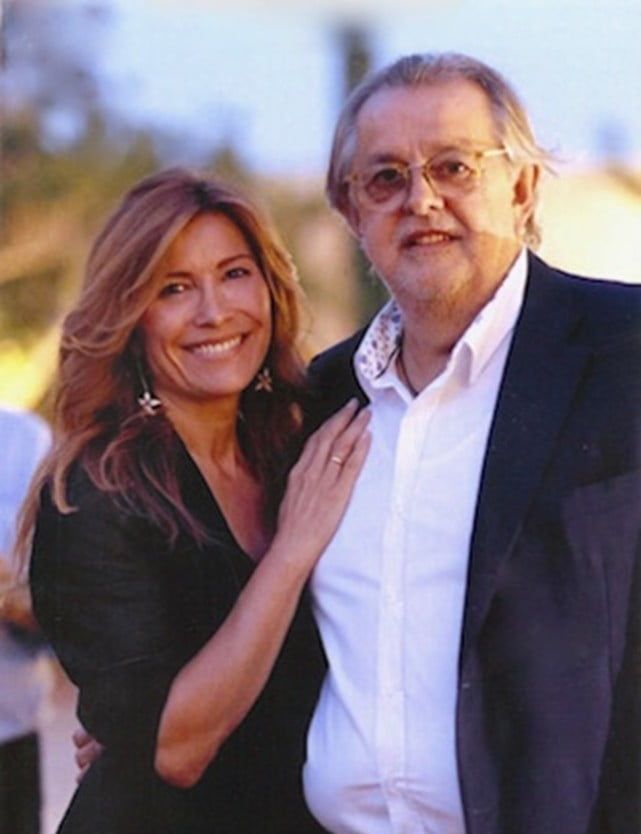
The José Luis Soler Collection is one of the most outstanding private collections of contemporary art in Spain. Founded in 2010 by businessman José Luis Soler and psychologist Susana Lloret, it has benefited from the guidance of renowned curator Vicente Todolí since its inception.
Originally known as the Per Amor a l’Art Collection, it adopted its current name following the death of José Luis Soler, as a posthumous tribute by his wife to preserve and honor his legacy.
The collection focuses on photography and abstract art from the early twentieth century to the present day, bringing together more than 2,500 works by 221 international artists. With a clearly global vocation, it received the ARCO Foundation’s “A” Award for Collecting just one year after opening to the public at the Bombas Gens Art Center—an acknowledgment of both its artistic value and its commitment to promoting contemporary art.
In 2023, the entire collection was recognized as part of the Valencian Cultural Heritage and included in the region’s register of movable property of patrimonial relevance, due to its extraordinary artistic and cultural value.

Susan Meiselas – Carnival Strippers, 1974

Silvia Bächli – 2012

Helen Levitt – New York, 1940

Edmund Clark – Plate 60. Naval Base Gallery, POW/MIA presentation table, 2013

Regina de Miguel – Rising anxiety, 2019
Photography Collection
The José Luis Soler Photography Collection has been built with the purpose of bringing together series rather than individual works, reflecting a deep commitment to each artist and their practice. It could be described as a collection of collections, with more than 2,300 works by 121 Spanish and international artists, including major figures such as Cartier Bresson, Walker Evans, and Robert Frank.
One of its most significant components is the postwar Japanese photography collection, with representatives such as Ikkō Narahara, Shōmei Tōmatsu, Daidō Moriyama, and Ishiuchi Miyako—forming the most extensive and important collection from this period outside Japan. The collection also includes a notable group of American and European documentary photographers, with works by Garry Winogrand, Walker Evans, Manuel Álvarez Bravo, Helen Levitt, Robert Frank, David Goldblatt, and Susan Meiselas. Likewise, conceptual art gives rise to a third collection, featuring works by Ed Ruscha, Lewis Baltz, and the Bechers, among others, in dialogue with key figures of German New Objectivity such as Karl Blossfeldt and Albert Renger-Patzsch.
A fourth collection includes contemporary photographers who continue and reinvent this visual language, including Yto Barrada, Xavier Ribas, Ian Wallace, Bleda y Rosa, Jochen Lempert, and José Guerrero.
Abstract Art Collection
The José Luis Soler Abstract Art Collection comprises 295 works by 58 Spanish and international artists. The collection represents the different currents within contemporary abstraction, forming a valuable testimony of abstract art from the second half of the twentieth century to the present. International in scope and ambition, this is one of the most unique contemporary art collections in Spain.
Within painting, the work of Esteban Vicente occupies a prominent place in the collection, as he is a key figure of abstract expressionism in Spain. His work appears alongside that of other major Spanish artists such as Juan Uslé, Luis Gordillo, José María Sicilia, Regina de Miguel, and Luis Claramunt; and internationally, the work of Irma Blank, Heimo Zobernig, and Anna-Eva Bergman, among others.
The sculptural and installation-based dimension is represented by artists who explore materiality, perception, and exhibition space, such as Cristina Iglesias, Susana Solano, Juan Muñoz, Teresa Lanceta, Inma Femenía, Jorge Peris, Pedro Cabrita Reis, and Sheela Gowda.
Our way of sharing
The legacy of an extraordinary person
Susana Lloret
“This collection was created with the intention of bringing together works of singular value and recognized quality, to be shared altruistically with as many people as possible. The goal has always been to cultivate sensitivity and to show that art can touch every one of us, if we give it the chance.”
Read the article
I. SHARING
José Luis Soler Vila (1956-2024). Committed, entrepreneurial, visionary, generous—and a collector.
I could describe him in many ways, but the one I prefer is simply this: he was a brilliant person. Visionary and courageous. A businessman with values who built successful ventures. A pioneer in Spain, he founded a factory that is still the benchmark in the sector. Innovative and with a sense of responsibility, he sought alternatives that could make the industry sustainable. And he also decided to invest in the welfare of others. And he chose, too, to invest in the well-being of others. His values led him to engage with his community, his city, and his people in countless ways. He never wanted anything to bear his name, even though everything bore his imprint.
And so, it is only fitting that his legacy should finally bear the name it deserves: his own.
He left behind few words, because he never sought the spotlight. But I insisted until I persuaded him to write about the “why” of the collection, of the foundation, and the art center as the prologue to the catalog of the exhibition Ornament = Crime?, the first of the collection, marking the opening of the art center we had created: Bombas Gens Centre d’Art. It was the art center of the Fundació Per Amor a l’Art, our foundation, through which we channel our desire to share.
The occasion called for it.
I find it hard to believe that I am in a position to write about the meaning and reasons that have brought me here; there are many, and none in particular. I don’t know the reason, and I doubt I ever will; it’s a chain of coincidences.
Encounters with people who sparked curiosities, sensitivities towards things different from what I do every day. A literature professor told me about Beckett. I didn’t understand what he meant, but I memorized the texts so I could perform them.
Guitars and the voices of friends who thought they could change many things that largely remain the same. And then, in my twenties, an artist appeared who wanted me to grasp the greatness of Tàpies. He didn’t succeed either.
All of that—and many other coincidences and people—tried to awaken in me, and in others, a sensitivity to art.
It is possible that, not being an actor, or a musician, or an artist, I developed in some other way the need to pass on a sensitivity for art.
Today, suddenly, we are inaugurating a space discovered by chance, presenting a collection that I’m still not sure I fully understand, and launching a project to help people in need.
It all began exactly as I describe. Where it will lead, I do not know.
I believe it will turn out well, because the people around me think much as I do and are helping me move the project forward.
What you see here is part of my present—of the discovery of a secret that many practice, and are fortunate to practice: sharing.
Thank you all.
José Luis Soler
II. COLLECTING
José Luis never explained when he began collecting, because it is like trying to explain when you begin to breathe… or to love. You don’t “start collecting.” You fall in love with art.
That’s what happened to us—at least, that’s how it felt. We fell in love with art. We began to travel, visiting art fairs, galleries, and museums.
We enjoyed discovering pieces that, in one way or another, touched our hearts or our souls.
So the collection was never the goal. It was the result.
The result of following that impulse to create something personal, unique, and valuable, in service of a sensitivity to art—and far removed from the world of business. “For the love of art,” simply because we wanted to, expecting nothing in return except the pleasure of sharing.
If I had to choose a moment when we began to think in terms of a “collection,” it would be the moment we stopped thinking about ourselves. It was when we realized that we wanted to keep going—not just for our own love of art, but with the purpose of revealing to as many people as possible that same magic we had already discovered. And to break that prejudice that whispers to us that we can only approach art if we are experts. Not at all. To be moved by art we only need one thing we all possess: our sensitivity. But art is like that. The meeting point between each person’s sensitivity and the work that everyone sees produces results that are as intimate as they are personal. Everyone looks at the same artwork, but no one sees the same thing…
This collection was created with the intention of bringing together works of singular value and recognized quality, to be shared altruistically with as many people as possible. The goal has always been to cultivate sensitivity and to show that art can touch every one of us, if we give it the chance.
Susana Lloret
From personal commitment to shared heritage
Vicente Todolí
“Beyond the artworks themselves, what we have built is a way of being in art: committed, open, and generous—reflecting the personality and philanthropic spirit of its founder.”
Read the article
The José Luis Soler Collection, formerly known as Per Amor a l’Art,was born out of a commitment to art, understood not as ornament or investment, but as a form of knowledge. From our first meeting, when I was still director of the Tate Modern, I realized that this was not just another collection proposal. José Luis had a sincere intention, a long-term vision, and a clear idea: to build something lasting, accessible, and meaningful.
José Luis was initially drawn to abstract painting. His passion for art was awakened by an exhibition of the abstract artist Esteban Vicente, a member of the American Abstract Expressionist generation, which he saw in 1987 in Madrid, and which I had curated. It was a good starting point, but I made the case that a collection that aspires to last must look further afield. We decided to broaden the scope and focus on photography (at that time it was still possible to make large photographic acquisitions for moderate prices), especially series, often conceived as books. And so, piece by piece, series by series, we built a collection with its own structure and personality, where painting, photography, and other languages dialogue with freedom and depth, in tension and harmony.
My involvement always went beyond simple advising. I set conditions: the works could not be sold, and the collection had to remain open to the public. José Luis not only accepted these terms—he embraced them. This attitude crystallized in Bombas Gens Centre d’Art, in Valencia, a cultural and social space born from the rehabilitation of an old hydraulic pump factory. A living center where art engaged in dialogue with heritage and the community.
We commissioned the restoration of the dilapidated building to architect Annabelle Selldorf, a long-time friend and specialist in rehabilitating historic buildings for use as art centers. At the time, she was involved in adapting the industrial buildings of the Luma Foundation in Arles into exhibition spaces.
José Luis and his wife, Susana Lloret, traveled to New York to assign her the project. He did not speak English, and she spoke it only with limited fluency, but the photographs of the abandoned factory and the vision for its future as an art center were enough to convince Selldorf to come to Valencia to see it herself. Once she saw the building, designed by architect Cayetano Borso di Carminati, she had no doubts, despite its dilapidated state. Jose Luis and Susana were deeply involved in the whole restoration process. Preserving a historic building had always been one of their goals.
We designed an exhibition and activities program around the collection: each year it would be presented as a thematic exhibition occupying one half of the building, while the other half would host two solo exhibitions by artists represented in the collection. To this end, a team was created, led first by Nuria Enguita and then by Sandra Guimarães, within a structure chaired by Susana Lloret. During the restoration work, a fifteenth-century wine cellar was discovered and preserved, as was a Civil War shelter, both of which can be visited. A garden with a reflecting pool, created by the artist Cristina Iglesias, was also added.
Today, this project is evolving into a new territory: digital. The collection is now open to the world through a virtual platform that allows visitors to explore it freely, establish personal itineraries, and even imagine exhibitions. A living tool that keeps intact the spirit of the collection: sharing knowledge, generating dialogue, giving rise to new interpretations, and making art a common good.
Working with José Luis on this journey has been a stimulating and unique experience. Beyond the artworks themselves, what we have built is a way of being in art: committed, open, and generous—reflecting the personality and philanthropic spirit of its founder. A legacy in motion.